Poland
University studies- MSc, biotechnologyWhere it began — molecular biology, microbiology, bioprocesses.À compléter : nom de l’université et années.
Human Adaptation Lab
We help teams under pressure understand what drains their capacity to act, regulate their physiology, and turn those observations into more sustainable ways of working.
20years of scientific research
7countries worked or studied in
17publications and reports, microbiology and toxicology
2Marie Curie fellowships
The problem
Persistent tiredness, fraying concentration, reactive decisions, friction, loss of initiative — these signals appear well before absence or declared burnout. And they are hard to raise without sounding like an accusation.
We make these signals discussable and actionable — without diagnosing employees, and without passing a single piece of personal data to the employer.
Your teams are not short of motivation.
Their capacity to adapt may simply be saturated.
Two ways in
The same physiology, two different rooms. Organisations buy a measurable programme. Individuals buy a change they can hold.
Organisations
For a team of eight to fifteen under real pressure. Measure what drains the capacity to act, test regulation practices, and turn the observations into decisions management can act on.
Individuals
The Reset, Mind the Gap, Choose — awareness, regulation, destination. Plus My Microbial Time™ for anyone who wants to work with their gut rather than against it.
The difference
Most interventions address one level. We connect four, because that is where the capacity to act is actually decided.
Energy, sleep, load, recovery, focus, relationships. Lived experience treated as data, not as impression.
Autonomic regulation, recovery, rhythm, a short and optional HRV measure. Always voluntary, always individual.
Micro-practices run over twenty-one days, with one light indicator and a stop condition.
Load, interruptions, meetings, margins of autonomy, decision quality. The part no individual can carry alone.
The method
Performance emerges from the interaction between the person, their physiology, their team and their organisation — not from any one of the four in isolation.
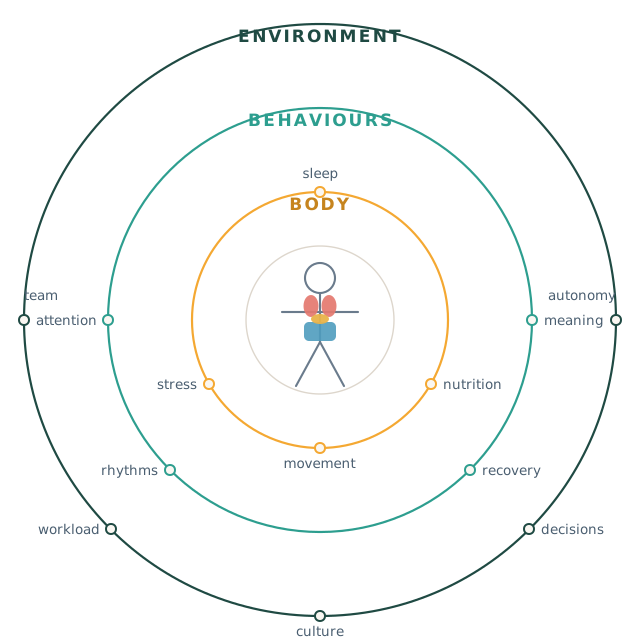
The body at the centre — stress, sleep, nutrition, movement. Around it, behaviours: rhythms, relationships, meaning. Around that, the environment: work, decisions, culture, family. Acting on one ring while ignoring the others simply asks the body to compensate a little more.
The toolkit
Each one answers a different question. Together they take a team from “we are tired” to “here is what we changed”.
Measure
The entry and exit assessment: energy, sleep and recovery, stress regulation, focus and decisions, food and microbiota, movement, relationships and work environment.
Regulate
The experiential part: reading the body’s signals and using short practices before a decision, a meeting or a difficult conversation.
Support
A twenty-one-day challenge: plant diversity, fibre and fermented foods, regularity. Careful links between habits, digestion, energy and recovery.
Decide
The organisational translation: facts, assumptions, unknowns, constraints, available options, next experiment. On a real team situation.
The flagship
Six weeks for a team of eight to fifteen people. Measure what drains the capacity to act, test concrete regulation practices, and turn the observations into sustainable ways of working.
What we measure
We do not promise to prevent burnout, or to raise your heart rate variability. We promise to measure, before and after, things that matter and that can be checked.
Our validation thresholds are pilot criteria, not results already achieved. This programme replaces neither statutory psychosocial risk assessment, nor occupational health, nor psychological care.
The founder
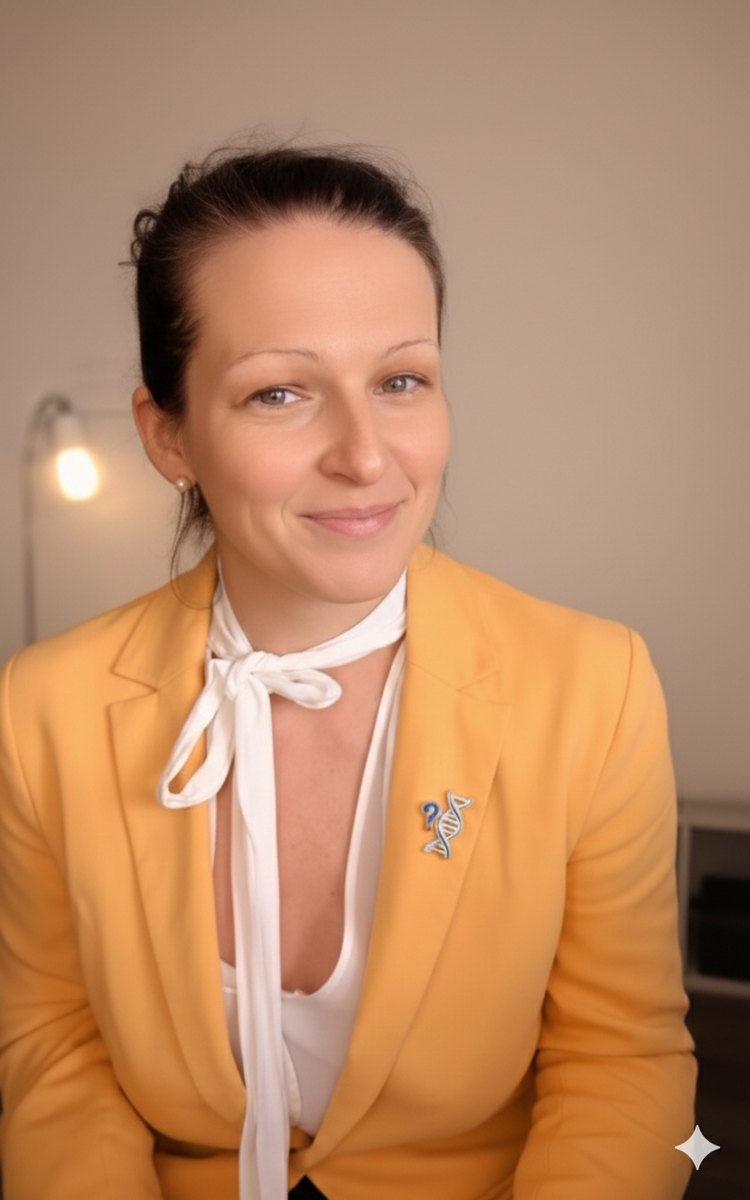
PhD in physiology and physiopathology, European Registered Toxicologist, coach trained to ICF standards. Twenty years across research, scientific assessment and industry — INRAE, Karolinska Institutet, the European Commission’s Joint Research Centre, Unilever, Bayer.
I created Resilient by Design™ to translate the science of adaptation into practices usable in the reality of work. What I bring: connecting human signals, working conditions and decisions — without reducing people to a score.
Track record
Academic research, an intergovernmental agency, an EU institution, industry — and now an independent practice. Each line carries the colours of that country’s flag.
Next step
Twenty-five minutes to check whether this format answers a real problem at your organisation. If it doesn’t, I’ll say so.